An electrician apprenticeship Ontario program is the most common route into a well-paid, respected skilled trade. You work for an employer, earn a wage from the first day and attend college blocks that teach the theory behind the work. At the end you write the Certificate of Qualification exam and become a licensed journeyperson. This guide explains how the electrician apprenticeship Ontario system works, how many hours you need, how to find a sponsor and what to expect along the way.
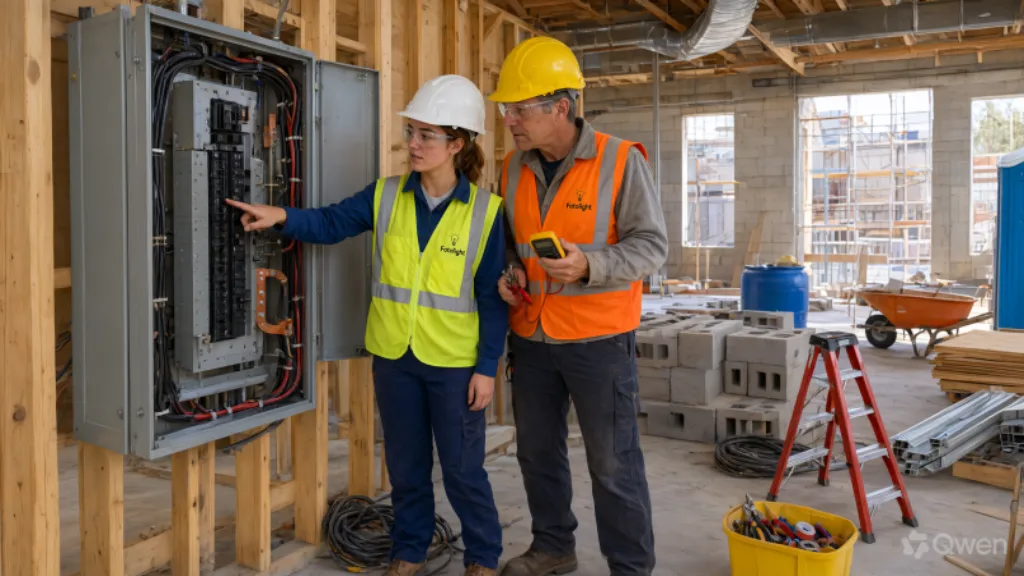
How an Electrician Apprenticeship Ontario Program Works
Every apprenticeship in Ontario combines two parts: on-the-job training with a sponsoring employer and in-school training at a training delivery agent, usually a college. The apprenticeship for Electrician – Construction and Maintenance (309A) is administered by Skilled Trades Ontario, which registers apprentices, sets the training standard and issues certificates.
The trade is compulsory. That means you must be a registered apprentice, or hold a Provisional Certificate of Qualification or a Certificate of Qualification, to work in it legally. A well-planned electrician apprenticeship Ontario path therefore starts with registration, not with simply showing up on a job site.
Electrician Apprenticeship Ontario Hours and School Levels
The total length is set at 9,000 hours, which is about five years of full-time work. Historically that was described as 8,160 hours on the job plus 840 hours in school. Under the updated electrical trades curriculum, the in-school portion is organized into four levels: Levels 1, 2 and 3 are 270 hours each (nine weeks), and Level 4 for 309A is 240 hours (eight weeks). That adds up to roughly 1,050 school hours, with the remaining time spent on the job.
The new curriculum is being phased in. Level 1 began on September 1, 2024, Level 2 on September 1, 2025, and Levels 3 and 4 are scheduled to start on September 1, 2026. Ask your training delivery agent which version applies to your intake, because the rules for existing and new apprentices differ.
- Total hours: 9,000
- Typical duration: about five years
- School structure: four levels, delivered in blocks
- Outcome: eligibility to write the 309A Certificate of Qualification exam
Who Can Start an Electrician Apprenticeship Ontario Employers Offer?
Skilled Trades Ontario lists Grade 10 as the education requirement for this trade, although colleges and many employers prefer Grade 12 or equivalent because the training involves algebra, trigonometry and technical reading. Most programs expect you to be at least 16 years old. You also need a sponsor who will sign a Registered Training Agreement with you.
Employers value dependable people who can follow safety rules, work in a team and learn quickly. If you have completed a pre-apprenticeship or a basic electrical course, mention it in your applications, because it shows initiative and gives you a head start.
Pre-Apprenticeship or Electrician Apprenticeship Ontario Registration: Which Comes First?
Many newcomers are unsure whether to take a school-based program first or to chase a job. A pre-apprenticeship is school-based training that teaches safety, wiring basics and job readiness, and it does not require a sponsor. An apprenticeship is paid, employer-sponsored training where you accumulate the 9,000 hours toward your licence.
The two are not competitors. A pre-apprenticeship can make you more hireable, and an electrician apprenticeship Ontario registration is what actually starts your official hours. If you have no experience, a short course first is often wise. If a good employer offers you a position straight away, take it and study in parallel.
How to Find a Sponsor for Your Electrician Apprenticeship Ontario Journey
Finding a sponsor is often the hardest step. Try several approaches at once:
- Apply directly to electrical contractors. Small and mid-size firms often hire helpers and later register them as apprentices.
- Contact unions and training centres. Some unions run their own apprenticeship intake.
- Use school connections. High school co-op programs and college job boards can lead to placements.
- Complete short training first. A course such as the Fotolight 309A training program helps you speak confidently about the Code and safety.
- Network. Tell friends, family and former coworkers that you are looking. Many apprentices are hired through personal referrals.
Be persistent and professional. Bring a clean resume, a positive attitude and a willingness to start with basic tasks.
Questions to Ask a Possible Sponsor
Before you sign, ask what kinds of projects the company does, how many licensed electricians will supervise you and how they handle time off for school. Ask whether they will cover tuition or tools, and whether the work is varied enough to cover the skills in the training standard. Good employers welcome these questions because they show you are serious about the electrician apprenticeship Ontario process.
Registering Your Apprenticeship With Skilled Trades Ontario
After you and your employer agree to work together, you register the training agreement through the Skilled Trades Ontario portal. Once approved, you receive the training standard for your trade. It lists the skills you must learn and have signed off by your trainer. Keep a personal copy and update it regularly, because it proves your hours and competencies.
The employer must be able to provide the work and supervision required. If the workplace cannot cover all the skills in the standard, the apprentice may need to rotate between tasks or employers. Raise this early rather than discovering a gap late in your electrician apprenticeship Ontario training.
What You Learn During an Electrician Apprenticeship Ontario Program
On the job you start with basic tasks such as carrying materials, running cable and installing boxes. As your skills grow you move on to bending conduit, terminating conductors, installing panels, lighting and motors, and troubleshooting faults. A licensed electrician signs off each skill when you can do it safely and correctly.
In school the focus is on theory:
- Electrical fundamentals and calculations
- The Canadian Electrical Code and Ontario electrical safety rules
- Blueprint reading
- Wiring methods, raceways and grounding
- Motors, controls and transformers
- Safety, tools and test equipment
The two parts reinforce each other. What you see on site makes classroom topics easier to understand, and the classroom explains why the rules exist.
A Typical Year in the Life of an Apprentice
In your first year you mostly assist. You carry materials, drill and fasten, pull wire and learn the names of every tool and fitting. Safety orientation, ladder and lift training and basic blueprint reading dominate the early months. Expect to be tired and to ask a lot of questions, which is exactly what you should be doing.
By the middle years you take on more responsibility. You lay out circuits, install devices and panels, work on motor controls and begin troubleshooting. You also attend the in-school blocks that explain the theory behind your daily tasks. In the final years you work with increasing independence, mentor newer apprentices and prepare seriously for the licensing exam. Looking back, most people say the electrician apprenticeship Ontario years flew by once they found their rhythm.
What Do Apprentices Earn?
Apprentices are paid while they learn, and wages rise as they complete hours and school levels. Pay depends on the employer, the region, whether the workplace is unionized and how far along you are. Salary websites show estimates that range from roughly the low $20s to the high $20s per hour, but treat those as examples only and ask any prospective employer for their wage schedule.
Once you complete your electrician apprenticeship Ontario journey and pass the exam, the Government of Canada Job Bank reports hourly wages for electricians in the province from about $20 to $50.50, with a median of $34. Experience, overtime and specialization can raise that further.
A Study Plan You Can Follow Across the Years
Do not wait until the end to study. In the early years, learn the layout of the Code book and practise looking up simple rules. In the middle years, add calculations such as conductor sizing, voltage drop and box fill, and review them after each school block. In the final year, shift to timed practice with realistic questions and focus on your weakest chapters.
Consistency beats intensity. Even twenty or thirty minutes a few evenings a week builds lasting recall. A notebook of rules you looked up and mistakes you made is far more useful than a pile of highlighted pages, and it makes your electrician apprenticeship Ontario experience much less stressful at exam time.
Preparing for the Certificate of Qualification Exam
Your final goal is to pass the 309A Certificate of Qualification exam. Our 309A sample test, the 309A exam guide and the electrician writing exam article are good places to begin.
The exam is multiple choice and allows up to four hours. Time management and Code navigation make the difference between a pass and a near miss, so build both skills during your apprenticeship, not just in the final weeks.
Common Mistakes in an Electrician Apprenticeship Ontario Path
- Working unregistered. Hours may not count toward your 9,000.
- Poor record keeping. Missing sign-offs delay your exam eligibility.
- Delaying school levels. Waiting too long can interrupt your progress and your wages.
- Studying only at the end. The Code requires steady, repeated exposure.
- Ignoring safety. Shortcuts end careers and endanger people.
How Fotolight Supports Apprentices and Future Apprentices
Fotolight offers training built around the Canadian Electrical Code, electrical safety, hands-on tool use and practice exams that mirror the real licensing test. We also help students understand the 309A registration and eligibility requirements. Whether you are looking for a sponsor or already deep in your electrician apprenticeship Ontario training, our classes help you study with structure. Visit the contact page to ask about upcoming classes.
Frequently Asked Questions
How long is an electrician apprenticeship in Ontario?
It is set at 9,000 hours, which is about five years of combined on-the-job and in-school training.
Do I need an employer for an electrician apprenticeship Ontario registration?
Yes. The apprenticeship is employer-sponsored, so you need a sponsor to sign a Registered Training Agreement before your hours officially count.
Can I study before I find a sponsor?
Yes. Pre-apprenticeship courses and preparation classes build your knowledge and make you more attractive to employers.
Final Thoughts
A successful electrician apprenticeship Ontario experience depends on three things: a good sponsor, careful record keeping and steady study. Register properly, learn from experienced journeypersons, complete each school level and prepare early for the exam. Do those things consistently and the licence will follow.